

Irrometer Sensors
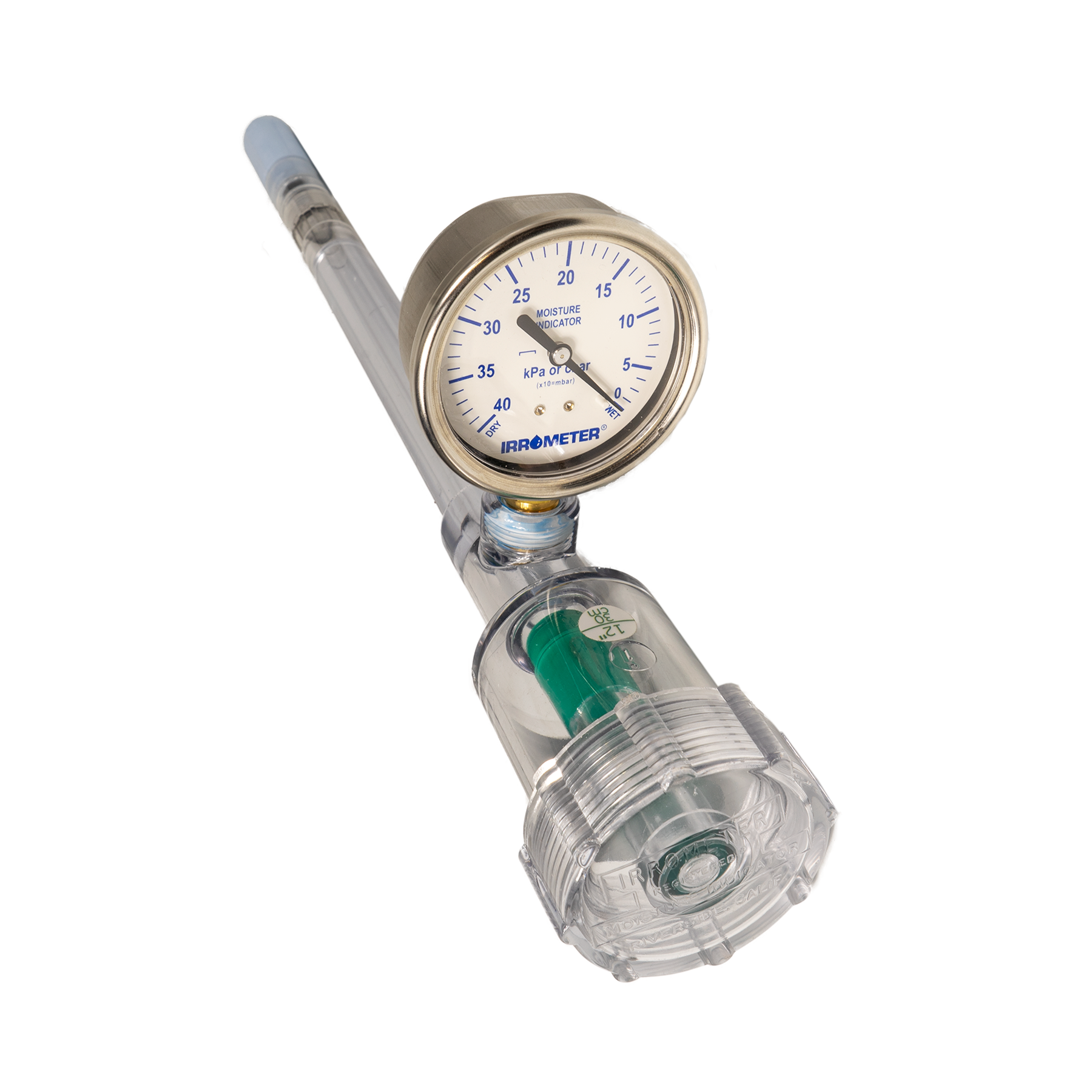
These precision low-tension tensiometers are used by professional growers and research institutes to accurately measure soil water tension in potting soil and soilless growing media. Designed for greenhouse, nursery, and container-grown crops, they provide fast, reliable insight into root-zone moisture status to support precise irrigation decisions.
Key Features & Benefits
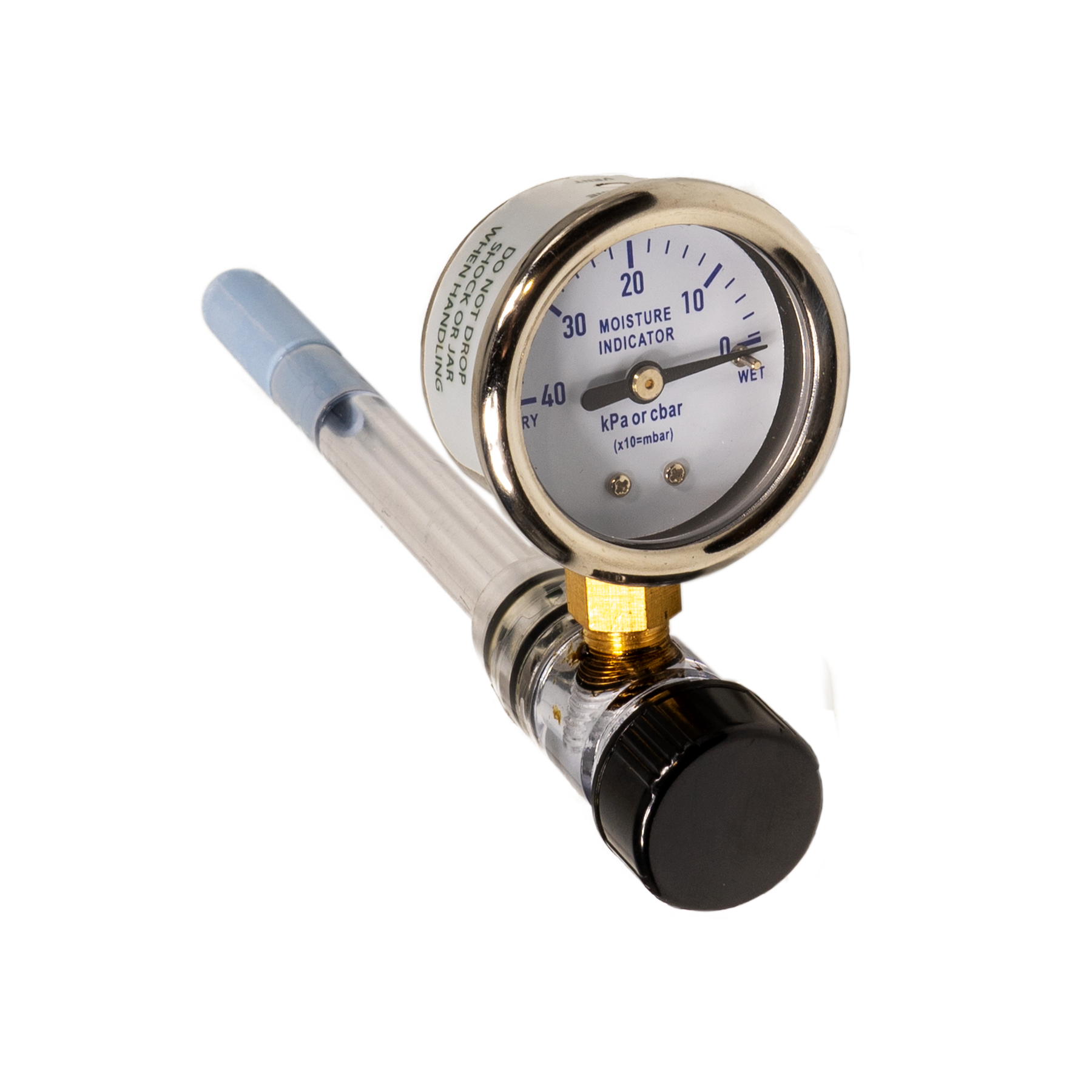
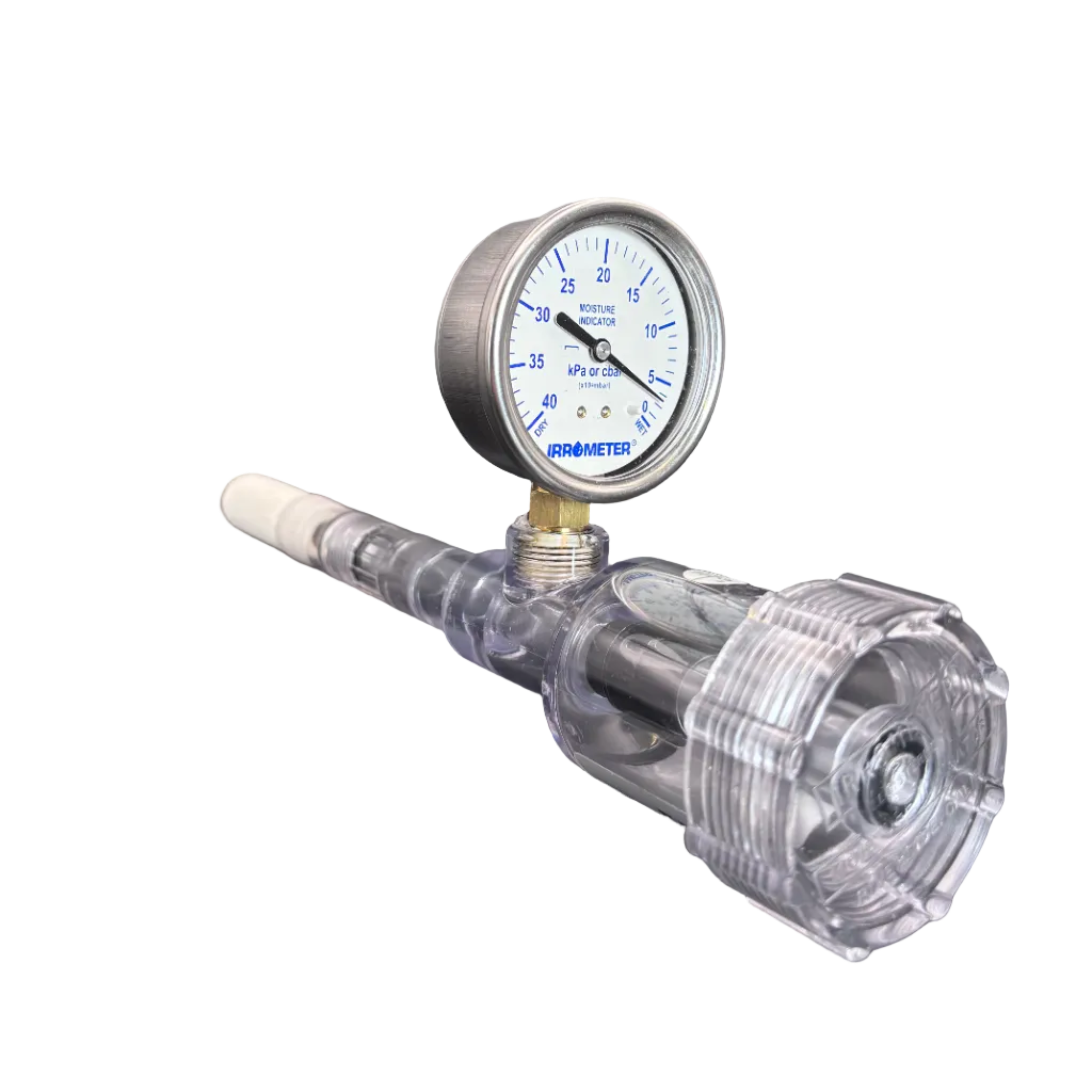
- Stainless Steel Gauge – Rustproof construction ensures long service life, stable accuracy, and improved compensation for temperature and elevation changes.
- Quick-Flo Ceramic Tip – Optimised for low-tension applications where rapid response to changes in soil moisture is required in potting mixes and growing media.
- Low Tension Measurement Range – 0–40 centibars (0–400 millibars), ideal for systems where very dry conditions (>300 mbar) are rarely encountered.
- In-situ Fluid Top-Up – Easily refilled without removing the instrument from the soil or growing media.
- Two Length Options for Different Root Zones:
- MLT 120 (12 cm) – Ideal for small to medium containers and shallow root zones.
- LT 150 (15 cm) - Great for medium to large containers.
- LT 300 (30 cm) – Designed for larger containers, deeper pots, and growing beds.
Choosing the Right Model
MLT 120 – Best suited to small pots and shallow substrates where moisture conditions change rapidly.
LT 150 – Ideal for medium- to large-sized containers, measuring soil moisture halfway down the pot in the active root zone.
LT 300 – Better suited to large containers or beds where moisture needs to be monitored deeper in the root zone.
All models use the same operating principle and measurement range; the primary difference is installation depth.
How It Works
IRROMETER Low Tension tensiometers operate on the tensiometer principle, measuring soil water tension, measured in centibars (cb):
- Higher readings indicate drier soil conditions.
- Lower readings indicate wetter soil conditions.
Each instrument consists of a sealed, fluid-filled tube fitted with a porous ceramic tip and a precision vacuum gauge. When installed, the ceramic tip is positioned in the root zone.
- As the soil dries, water is drawn out of the instrument through the ceramic tip, creating a partial vacuum inside the tube that registers on the gauge.
- As irrigation or watering occurs, water moves back into the soil and the instrument, relieving tension and lowering the gauge reading.
In practical terms, the instrument shows how hard the roots are working to extract water.
Because of this direct physical measurement, no calibration is required for different soil types or growing media under normal operating conditions. For example, a reading of 15 cb (150 mbar) represents the same root extraction effort whether the crop is grown in sandy soil or a potting soil substrate.
How to Use
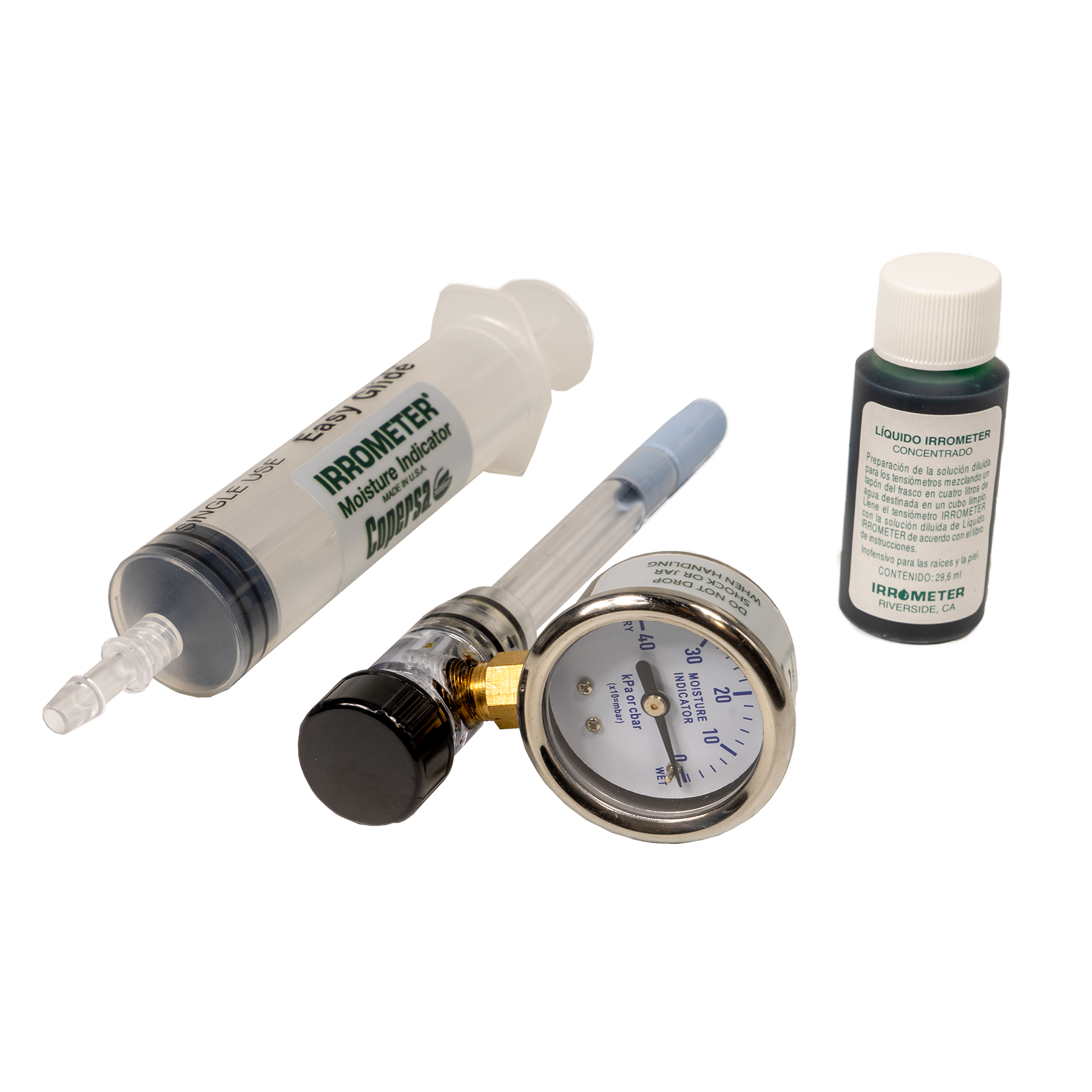
The MLT 120, LT 150 and LT 300 require an Irrometer Service Kit for setup and ongoing maintenance.
Multiple instruments can be serviced and maintained using a single service kit.
You may also like